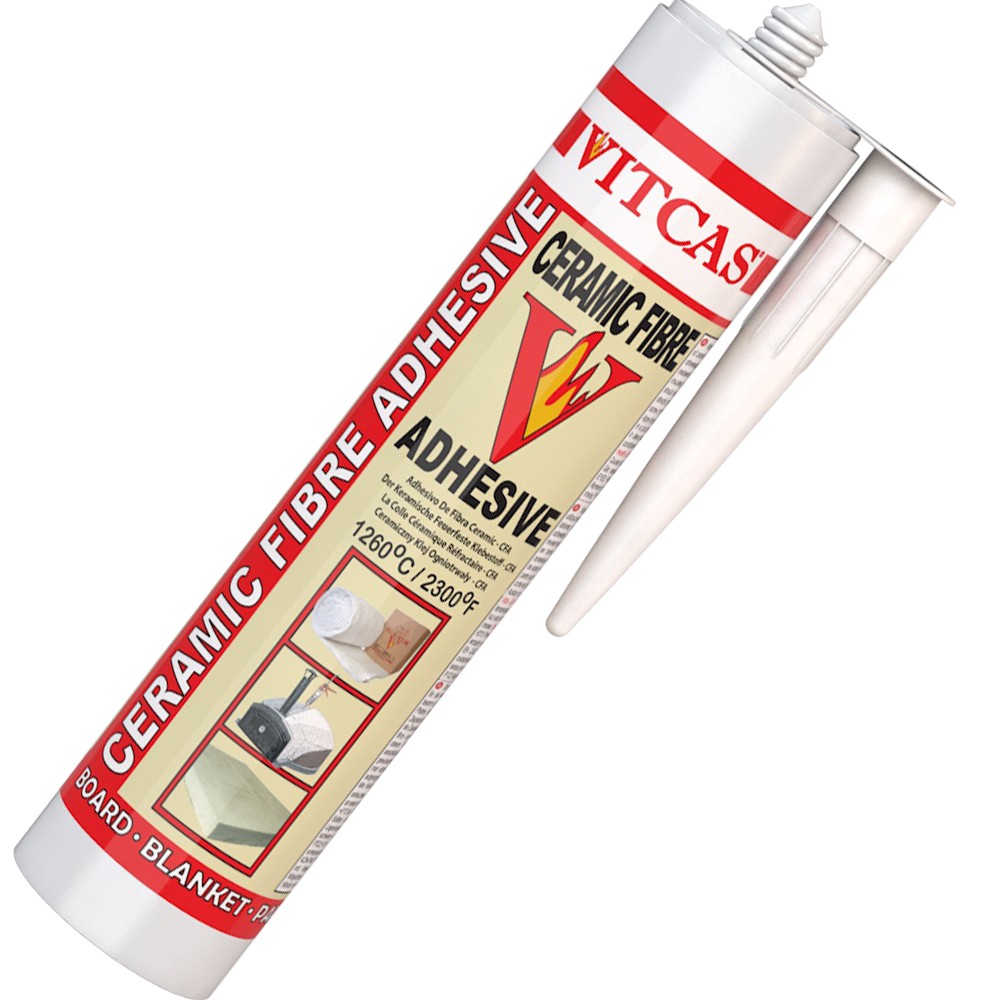
Detached ceramic insulation requires assessment before applying adhesive. It is necessary to determine whether the problem is a contaminated substrate, worn material, or inadequate retention of the insulation layer. Ceramic Fibre Adhesive is used for proper fixing, but it will not restore the missing thickness of damaged insulation.
Check the substrate and material condition
The manufacturer describes Vitcas Ceramic Fibre Adhesive for appropriate fibrous materials and selected substrates, including ceramic and metal ones. Before repair, compare both connecting elements with the product datasheet. The mere word ceramic in the name does not confirm every application.
The substrate should be prepared according to the instructions, removing contaminants that hinder adhesion. Check for corrosion, loose coatings, and previous adhesive residues. If the insulation is deformed or fragments fall out, determine the need for replacement instead of gluing random remnants again.
Match the retention method to the material format
ceramic fibre blanket requires maintaining the established thickness and protection. Ceramic paper serves other purposes in appropriate thin interlayers and seals. For both materials, geometry, pressure, and working conditions are important, not just the type of adhesive.
In an outdoor oven, consider adhesive as part of a compatible insulation system, as described by the manufacturer for this application. Adhesion and mechanical retention may serve separate functions. Do not assume that any thick layer or heavy panel will hold without the intended support.
Fit the repair before application
Prepare the dimensions of the component and check the terminations at adjacent parts. Review the safety data sheet before cutting fibrous material. The arrangement should minimize loose fibres on the working surface and in the airflow.
Follow the application, setting, and return-to-service requirements from the current instructions. After completion, inspect the retention and cover of the repaired layer. Record the cause of delamination and the solution applied so that the next inspection addresses the durability of the entire part, not just the appearance of the new adhesive joint.