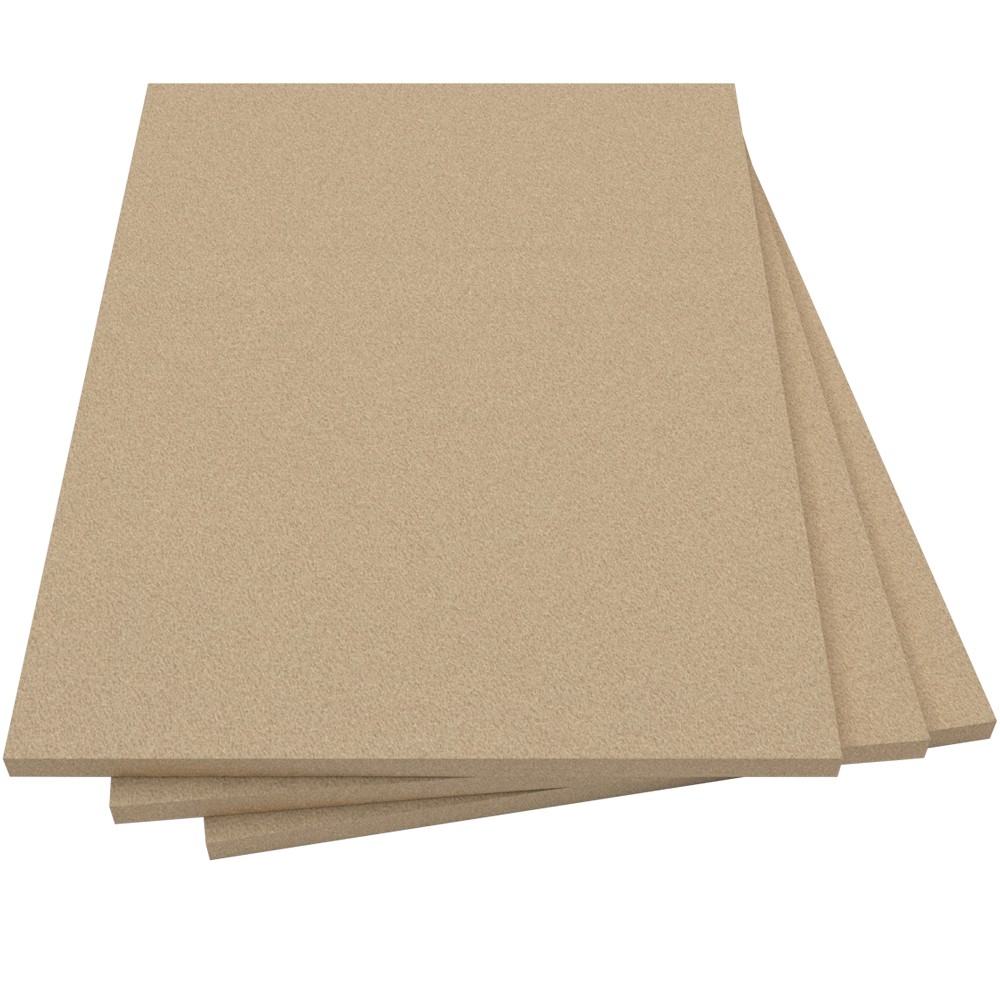
When replacing a lightweight lining, it is worth comparing the format of finished elements with the stove’s requirements. Vermiculite Fire Bricks are a Vitcas product for the described insulation applications. Select material according to the original function of the part. The photo shows Vermiculite Fire Board, compared below with the brick format.
Check the set and installation location
Vermiculite Fire Bricks are sold in sets of six pieces with nominal dimensions of 200 × 90 × 25 mm. The data sheet specifies indoor use and resistance up to 1000°C. Selection for a specific insert must take into account its documentation and the required lining format.
Record the mounting side, support, and remaining spaces. When a piece is worn, compare the dimension with an undamaged spot. The mark of the old edge does not always show the original size of the part.
Distinguish the light and dense layer
Vermiculite Fire Board is a different format of insulating material. The sheet and the finished brick have their own sizes and ranges. Do not derive the parameters of one product from the name of another, even if both use vermiculite.
Dense refractory bricks have a different mass and mechanical tasks. Compare the function, contact, and method of heat transfer. The choice of a lightweight lining should correspond to the construction of the device, not just facilitate cutting.
Prepare the format before assembly
Dry-fit the arrangement while cold and plan all cuts before starting. Observe the safety data sheet requirements during processing and provide proper support for the element. The method of holding parts should correspond to the insert, without randomly adding glue in every available spot.
Record the product, dimensions, and a photo of the seating. Store the material according to instructions, in conditions protecting it from moisture. During the next replacement, the data will allow you to reproduce the confirmed detail instead of selecting a new part only by the colour of the removed, damaged fragment.